Best Product Hunt Alternatives in 2026 (That Give Lasting Visibility)
Product Hunt gives you 24 hours. These 5 Product Hunt alternatives give your startup lasting visibility, visual presence, and real engagement in 2026. Compare platforms, pricing, and who each one is best for.
Product Hunt has been a go-to for founders looking to get their startup in front of early adopters. But in 2026, the landscape has changed. More platforms offer visual presence, gamified engagement, and long-term discoverability that Product Hunt simply doesn't provide.
Whether you need more lasting visibility, better engagement, or a different audience — here are the best Product Hunt alternatives worth trying this year, with a full breakdown of pricing and who each one is best for.
Quick Comparison — Best Product Hunt Alternatives 2026
1. Startup Launch Page — Best Product Hunt Alternative for Lasting Visibility
Best for: permanent visual presence + daily returning visitors
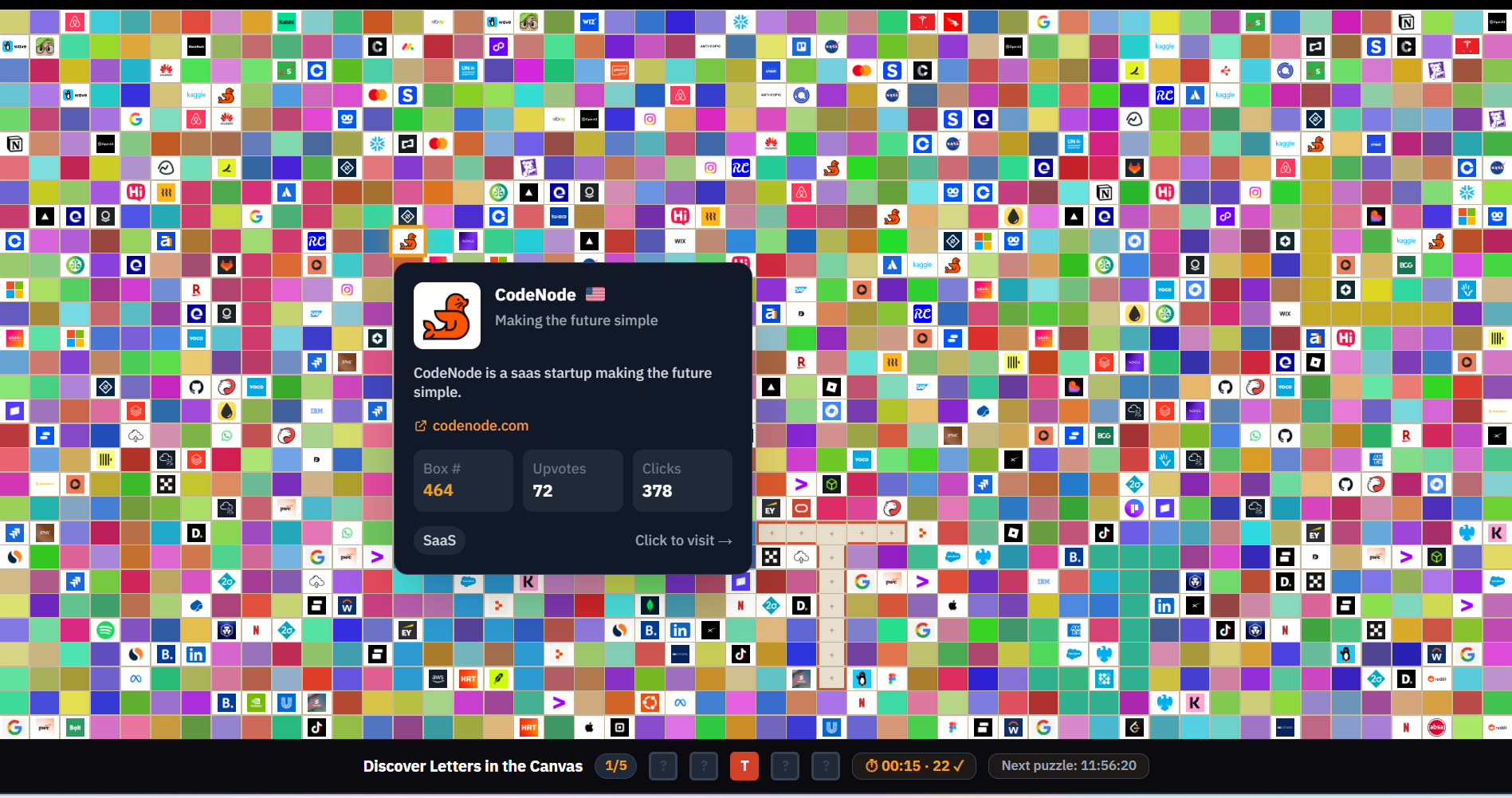
Startup Launch Page is a visual startup canvas inspired by the Million Dollar Homepage. Instead of a list that buries your startup after 24 hours, it features a 1,500-box interactive grid where startups purchase a box to permanently display their logo, tagline, and link — creating a living mosaic that visitors actually spend time on.
The key differentiator is the Daily Letter Checkbox game. Unoccupied boxes become part of a daily interactive quiz — visitors discover hidden letters by clicking boxes with similar colors. The fewest clicks wins. This gamified loop drives daily return visits, meaning every startup on the grid gets consistent recurring exposure — not a single traffic spike that fades overnight.
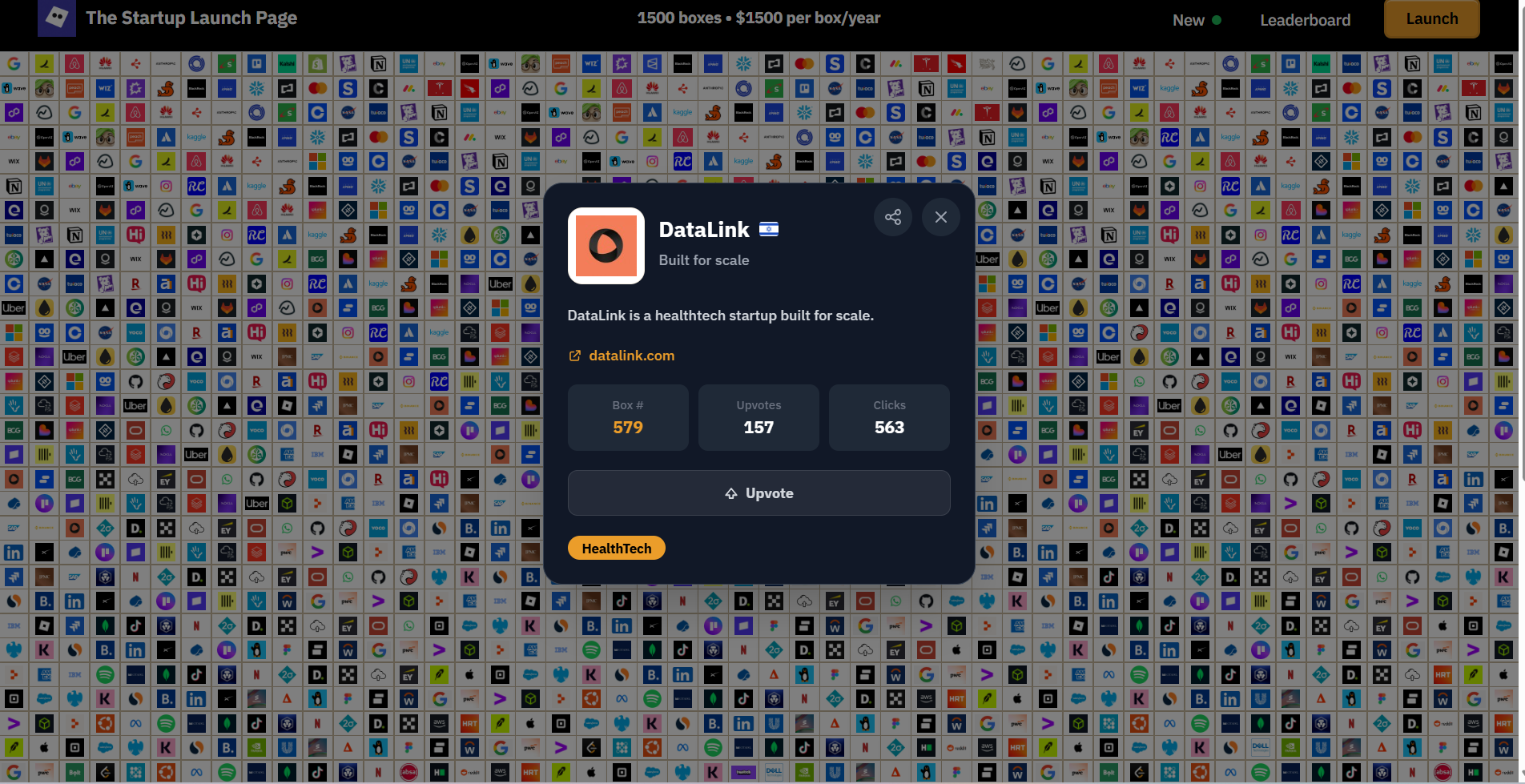
Each startup gets a detailed modal with logo, description, website link, upvotes, and real-time click tracking. Grid customers buy a canvas box for permanent 24/7 display ($1,500/year). In-game sponsors get separate placements inside Chess, Tetris, and Sudoku — only 10 spots at $5,000/mo.
- ✓1,500-box visual canvas — every startup gets a permanent, visible spot on the homepage
- ✓Daily Letter Checkbox game on unoccupied boxes boosts engagement and return visits
- ✓Grid customers (canvas) and in-game sponsors (games) are separate — clear placement tiers
- ✓Inspired by Million Dollar Homepage & One Million Checkboxes — proven viral concept
- ✓Hover cards and click-through modals with full startup details, screenshots, upvotes
- ✓Real-time click and upvote tracking for every listed startup
- ✓Affordable box pricing at $1,500/year per box
- ✓SEO-optimized individual startup profiles
- ✗Limited to 1,500 total boxes — scarcity drives urgency but limits capacity
- ✗Newer platform — still building community
2. Uneed
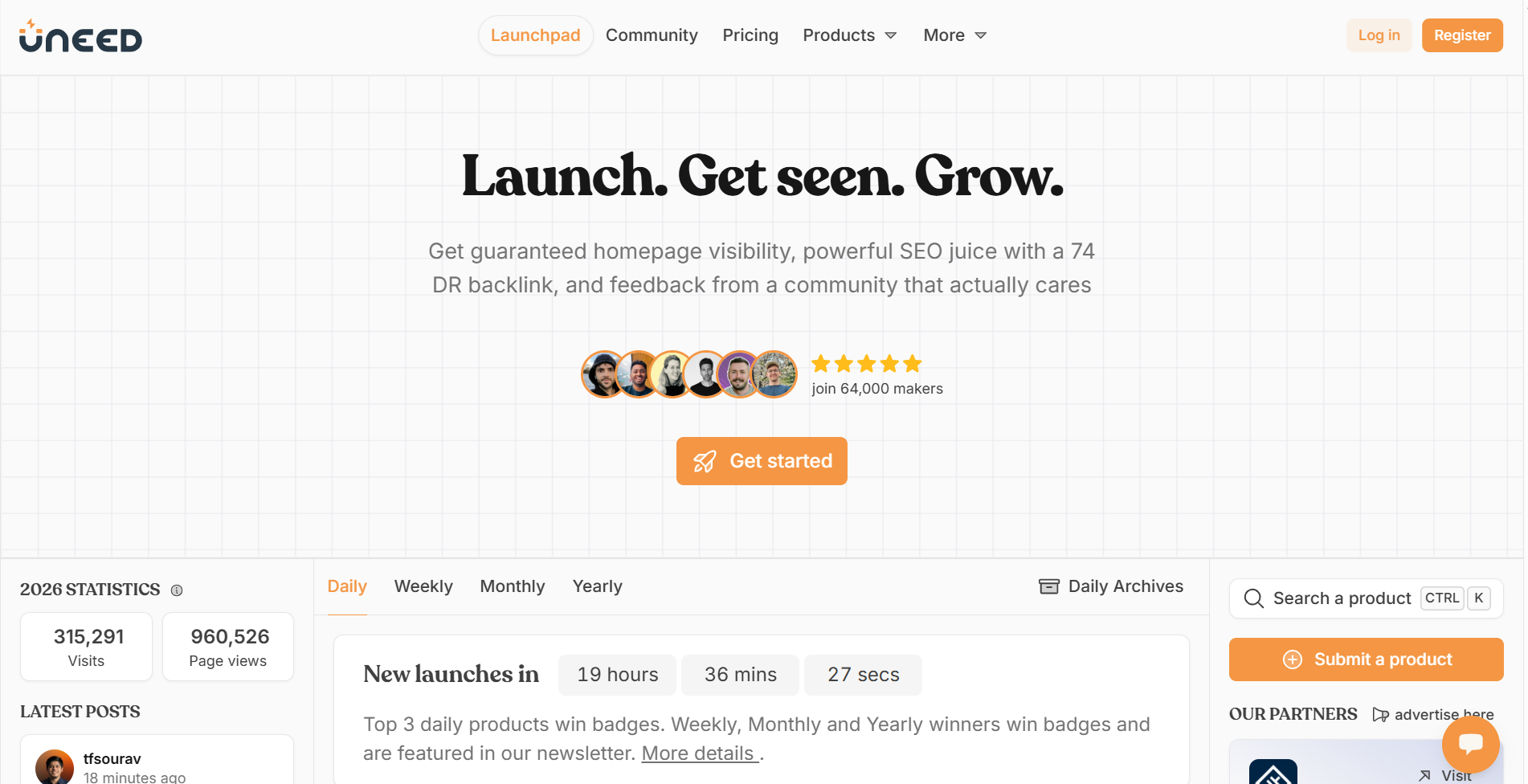
Best for: Indie hackers and small startups looking for a quality-curated directory listing with SEO value, as a secondary launch channel.
- ✓Curated listings — quality bar means each listing gets more attention
- ✓Persistent directory page that can rank in search engines
- ✓Clean, modern interface with good UX for visitors
- ✓Growing community of indie hackers and bootstrapped founders
- ✓Good for long-tail SEO — listing pages can drive organic traffic over time
- ✗Curation queue can delay listing by days or weeks
- ✗Significantly smaller audience than Product Hunt or Hacker News
- ✗No visual canvas or persistent logo display beyond the text listing
- ✗No gamification, interactive engagement, or daily return mechanic
- ✗Limited analytics — no real-time click or upvote tracking
- ✗Premium listings required for meaningful front-page visibility ($29+)
3. BetaList
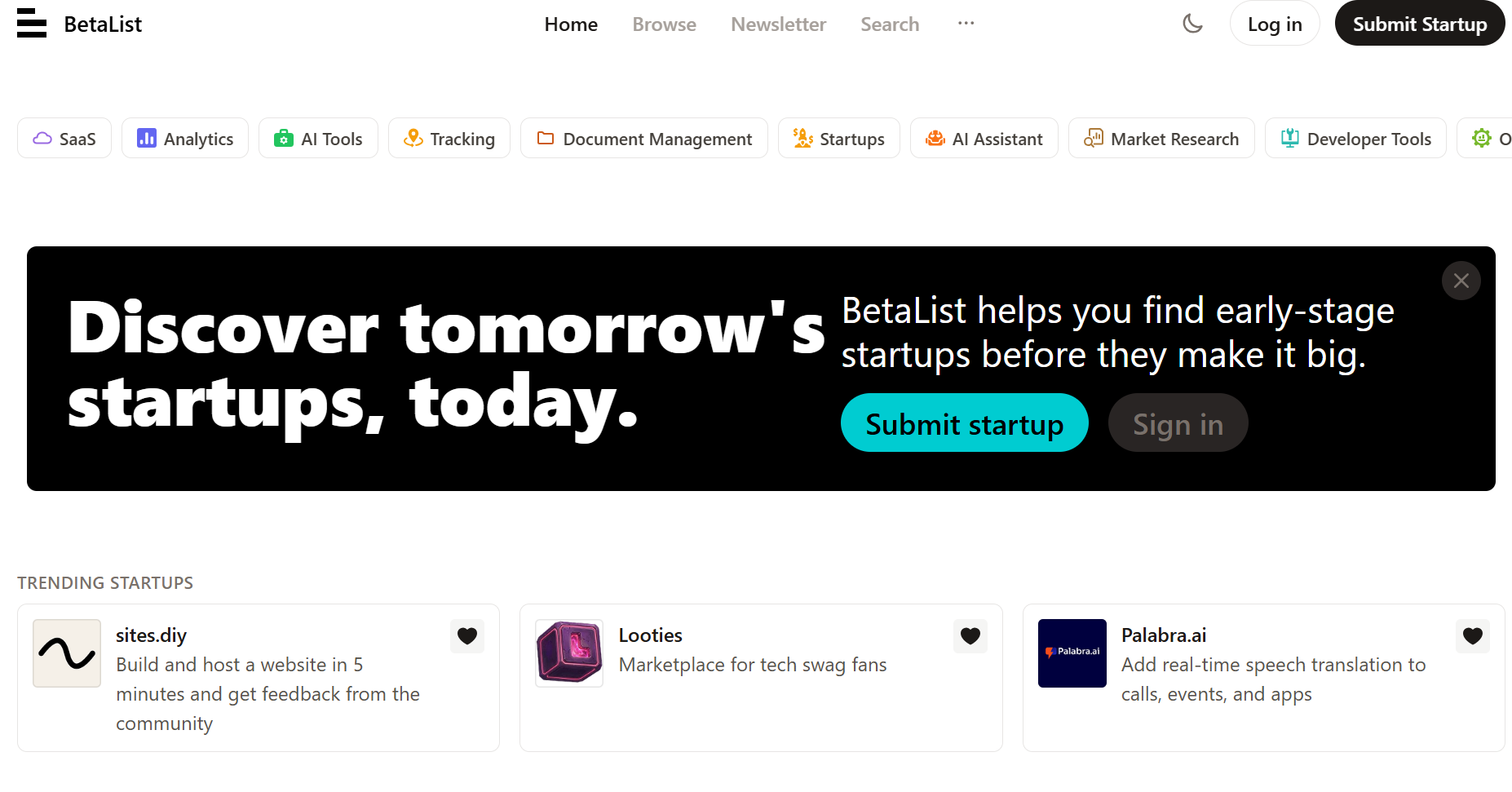
Best for: Very early-stage startups looking for their first beta testers before a public launch, as one channel among many.
- ✓Specifically designed for pre-launch and beta products
- ✓Dedicated audience actively looking to try new products
- ✓Email newsletter drives targeted early-adopter traffic
- ✓Good for collecting first beta testers and validating demand
- ✓Free to submit — no upfront cost for standard listing
- ✗Free submission queue takes 2–4+ weeks to be approved
- ✗Fast-track costs $129 — significant for early-stage startups
- ✗Small audience compared to Product Hunt or Hacker News
- ✗Text-heavy listing with no visual canvas or persistent logo display
- ✗No interactive engagement, gamification, or daily return mechanic
- ✗Long-term visibility depends on search rankings — not guaranteed
- ✗Newsletter traffic is a one-time spike, not ongoing exposure
4. Hacker News
Best for: Technical products targeting software engineers and developers, as a supplementary launch channel — not as a primary strategy.
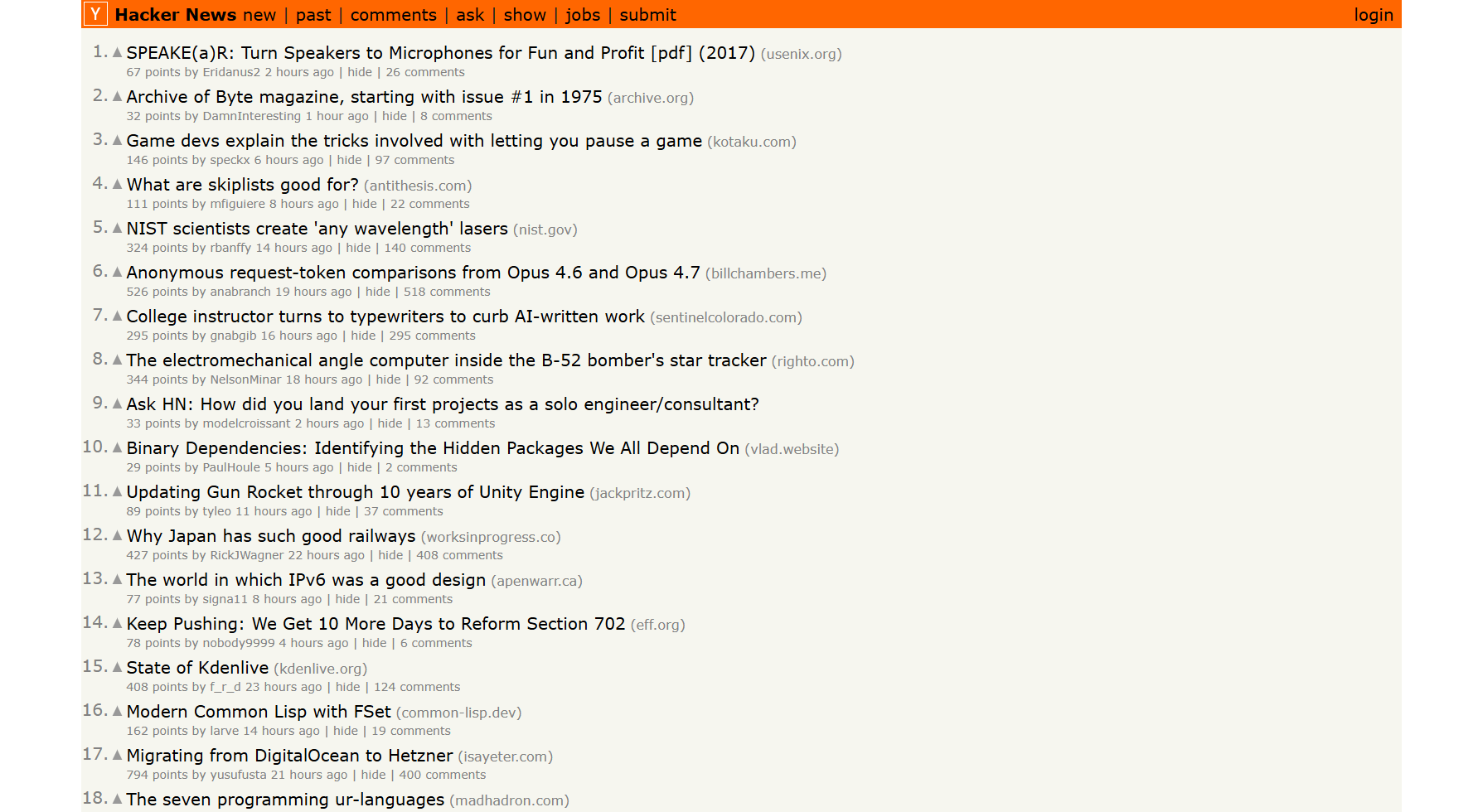
- ✓Enormous, high-quality technical audience — developers, founders, investors
- ✓Potential for viral traffic and press attention on a front-page post
- ✓Y Combinator credibility lends legitimacy to featured products
- ✓Substantive comments can provide genuine product feedback
- ✓Completely free to post
- ✗Most Show HN posts get fewer than 10 upvotes and no front-page placement
- ✗Not a dedicated launch platform — no startup profiles or structured listings
- ✗Front-page visibility lasts only a few hours before cycling off
- ✗Community can be harsh — critical comments can damage perception
- ✗No visual branding, logo display, or persistent product page
- ✗No engagement features, gamification, or analytics
- ✗Outcome is essentially unpredictable — success depends on timing and luck
5. Indie Hackers
Best for: Bootstrapped founders building in public who want peer support and community feedback — as a complement to dedicated launch platforms, not a replacement.
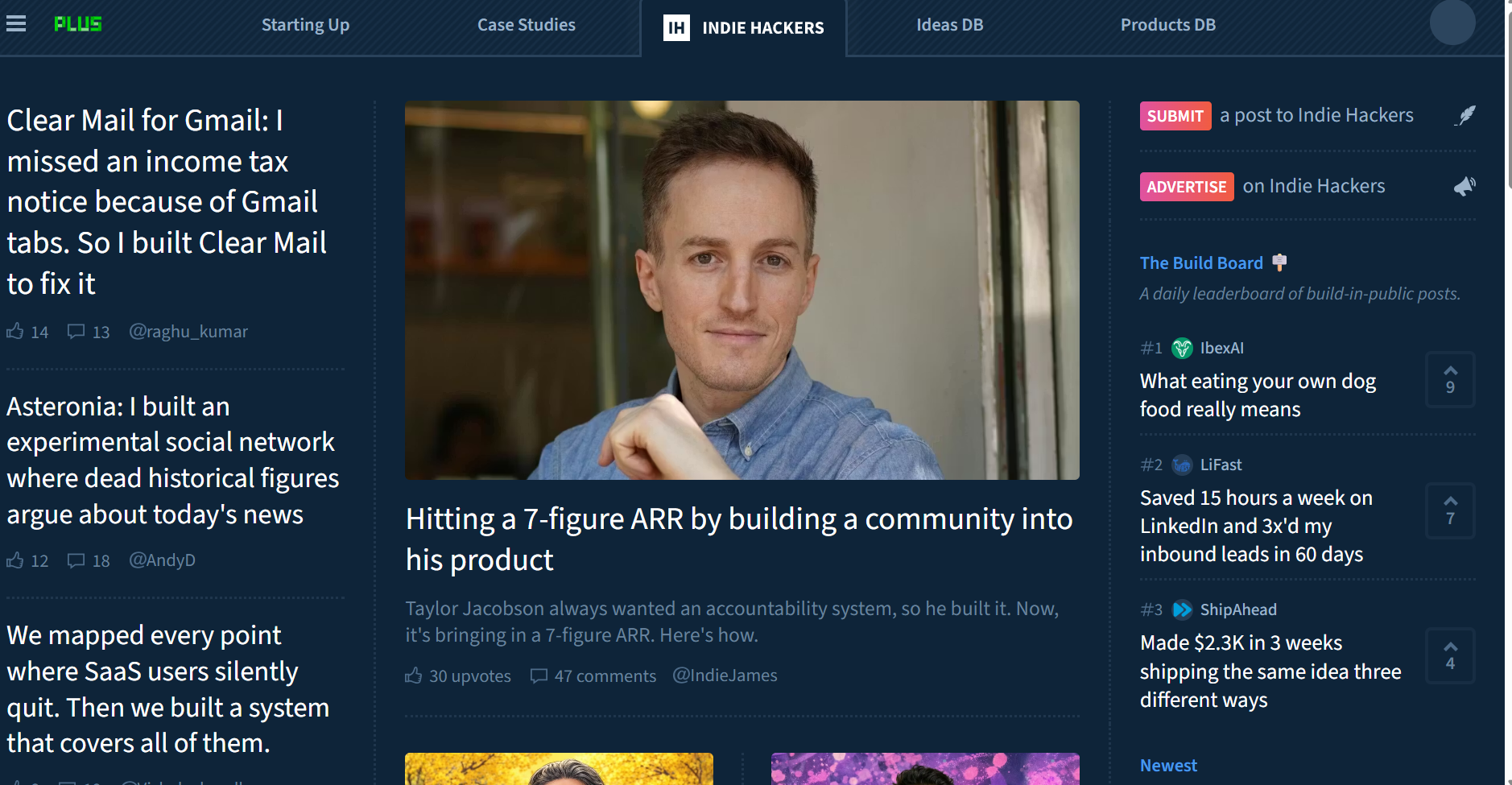
- ✓Supportive, authentic community of bootstrapped founders
- ✓Great for sharing revenue milestones and building in public
- ✓Real discussions on pricing, growth, and founder challenges
- ✓Good for finding collaborators, advisors, and peer support
- ✓Free to join and post with no moderation queue
- ✗Not a dedicated launch platform — no structured product submissions or listings
- ✗No homepage featuring new products or upvote mechanics
- ✗Visibility depends entirely on post engagement — quiet posts get ignored
- ✗No visual canvas, persistent logo display, or branded product profile
- ✗No gamification, interactive discovery, or daily return mechanic
- ✗Platform activity has declined since the Stripe acquisition
- ✗Community skews toward bootstrapped B2B SaaS — limited fit for consumer products
Product Hunt Alternatives: Side-by-Side Comparison
| Platform | Persistent Visibility | Visual Presence | Daily Return Visits | Pricing | Best For |
|---|---|---|---|---|---|
| Startup Launch Page | ✓ Permanent | ✓ 1,500-box canvas | ✓ Daily game | $1,500/yr | Lasting visual exposure |
| Product Hunt | ✗ 24 hours | ✗ Text list | ✗ None | Free / paid options | Launch day traffic burst |
| Uneed | ✓ Directory | ✗ Text list | ✗ None | Free / $29+ | Curated indie audience |
| BetaList | ✓ Directory | ✗ Text list | ✗ None | Free / $129 fast-track | Beta testers |
| Hacker News | ✗ Hours | ✗ Text only | ✗ None | Free | Developer audiences |
| Indie Hackers | ✗ Forum posts | ✗ None | ✗ None | Free | Community feedback |
How to Choose the Right Product Hunt Alternative
If you want a one-day traffic burst and your audience is tech-savvy early adopters, Product Hunt or Hacker News still deliver — but the visibility is temporary.
If you want a persistent directory listing, Uneed or BetaList are solid — though discoverability depends on their curation and search rankings.
If you want community and founder networking, Indie Hackers is the best option for connecting with bootstrapped builders.
But if you want permanent visual presence on an interactive canvas, a daily puzzle game that drives return visits, and in-game marketing inside Chess, Tetris, and Sudoku — Startup Launch Page is the most differentiated option available in 2026.
Frequently Asked Questions
Ready to claim your box?
200+ startups already live. Permanent placement, daily returning visitors, zero chasing upvotes.
Get Your Box Now →