Best Uneed Alternatives in 2026 (More Visibility, Less Waiting)
Looking for Uneed alternatives in 2026? Compare startup launch platforms with faster listing, better visual presence, gamified engagement, and lasting discoverability. Full breakdown with pricing.
Published on
Updated
Written by
Victor Ogonyo
Uneed has been a go-to for founders looking to get their startup in front of early adopters. But in 2026, the landscape has changed. More platforms offer visual presence, gamified engagement, and long-term discoverability that Uneed simply doesn't provide.
Whether you need more lasting visibility, better engagement, or a different audience — here are the best Uneed alternatives worth trying this year, with a full breakdown of pricing and who each one is best for.
Quick Comparison — Best Uneed Alternatives 2026
1. Startup Launch Page — Best Uneed Alternative for Lasting Visibility
Best for: permanent visual presence + daily returning visitors
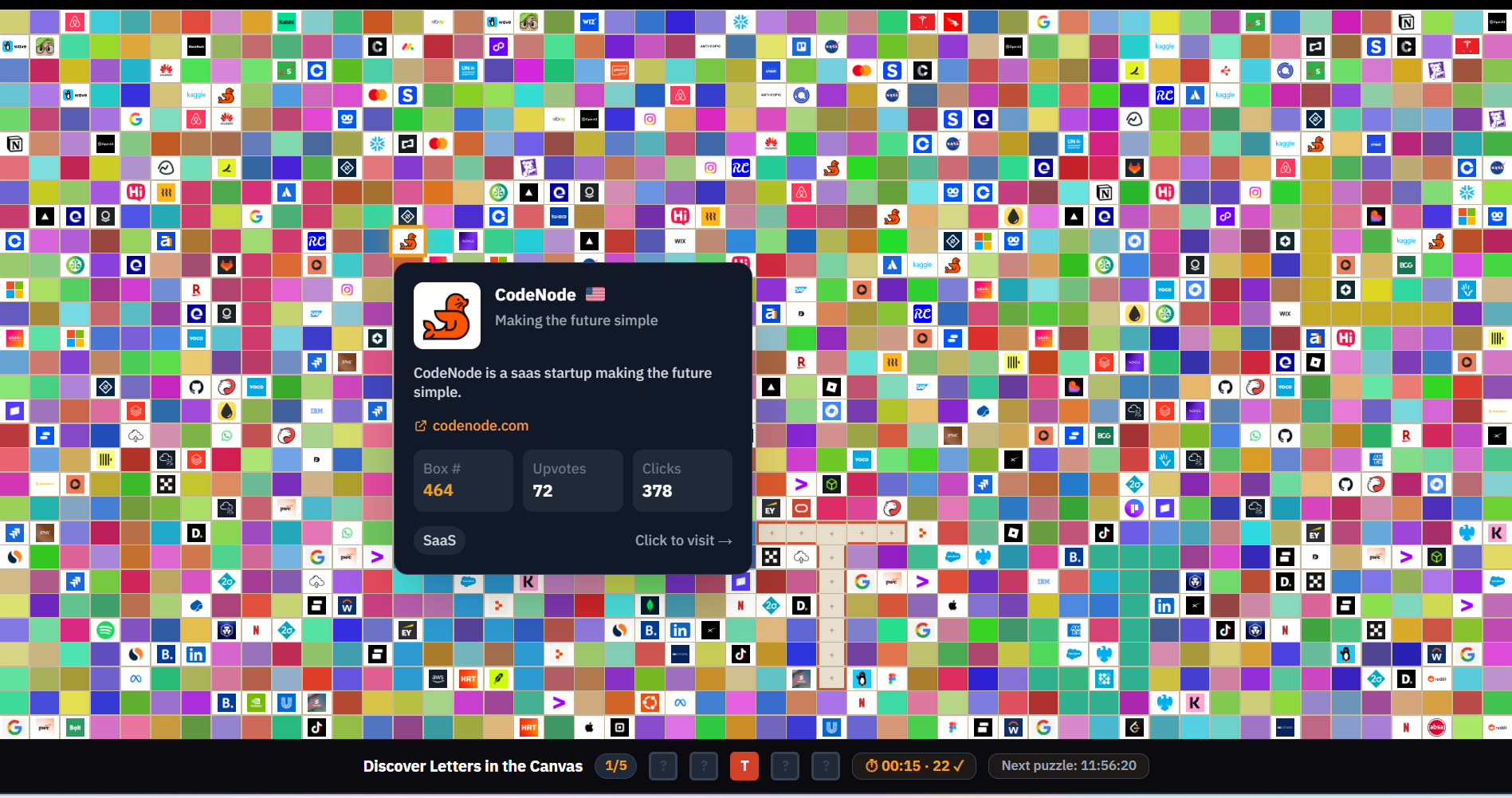
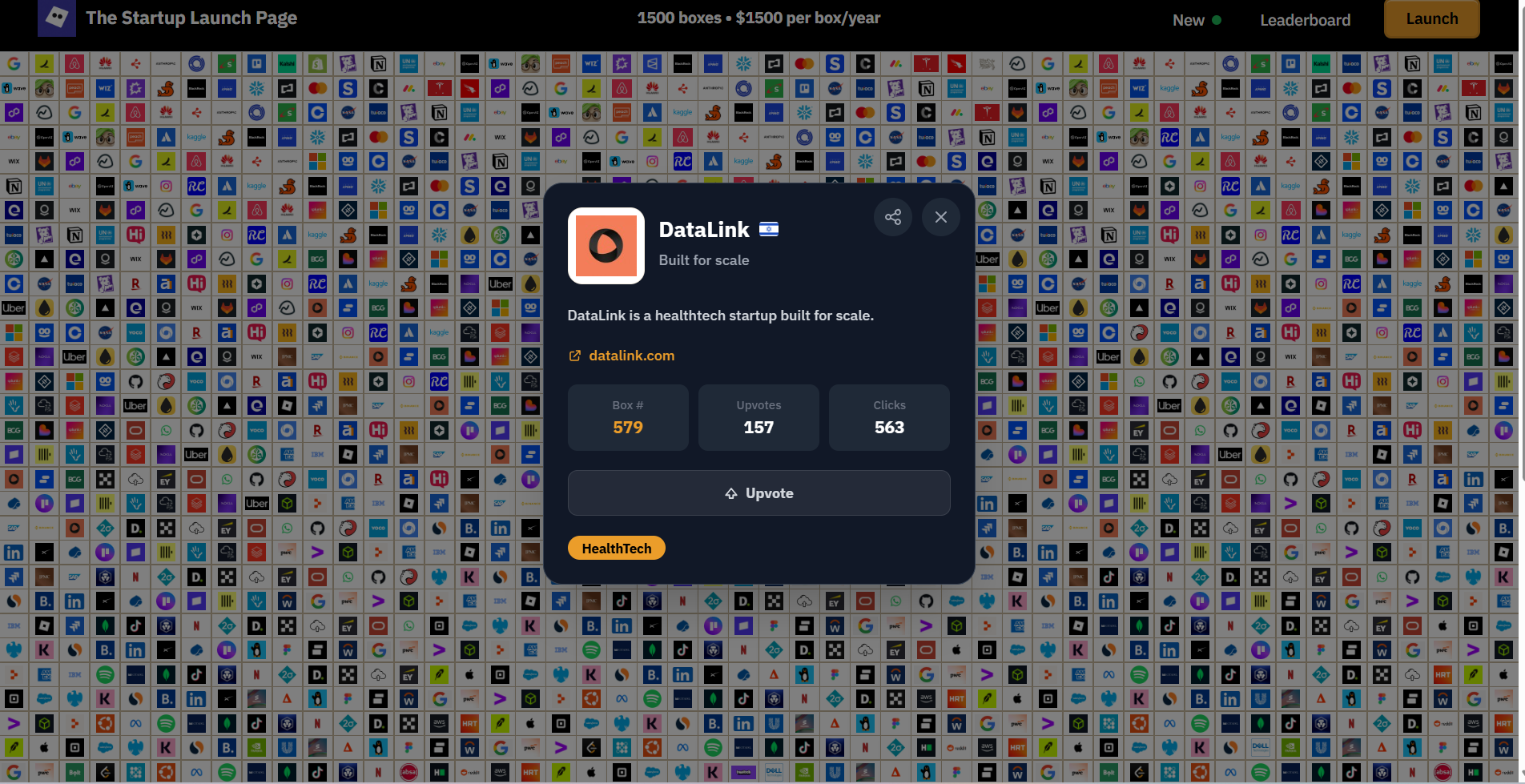
Startup Launch Page is a visual startup canvas inspired by the Million Dollar Homepage. Instead of a list that buries your startup after 24 hours, it features a 1,500-box interactive grid where startups purchase a box to permanently display their logo, tagline, and link — creating a living mosaic that visitors actually spend time on.
The key differentiator is the Daily Letter Checkbox game. Unoccupied boxes become part of a daily interactive quiz — visitors discover hidden letters by clicking boxes with similar colors. The fewest clicks wins. This gamified loop drives daily return visits, meaning every startup on the grid gets consistent recurring exposure — not a single traffic spike that fades overnight.
Each startup gets a detailed modal with logo, description, website link, upvotes, and real-time click tracking. Grid customers buy a canvas box for permanent 24/7 display ($1,500/year). In-game sponsors get separate placements inside Chess, Tetris, and Sudoku — only 10 spots at $5,000/mo.
Pros
✓1,500-box visual canvas — every startup gets a permanent, visible spot on the homepage
✓Daily Letter Checkbox game on unoccupied boxes boosts engagement and return visits
✓Grid customers (canvas) and in-game sponsors (games) are separate — clear placement tiers
✓Inspired by Million Dollar Homepage & One Million Checkboxes — proven viral concept
✓Hover cards and click-through modals with full startup details, screenshots, upvotes
✓Real-time click and upvote tracking for every listed startup
✓Affordable box pricing at $1,500/year per box
✓SEO-optimized individual startup profiles
Cons
✗Limited to 1,500 total boxes — scarcity drives urgency but limits capacity
✗Newer platform — still building community
Pricing: Grid listing: $1,500 per box/year. In-game sponsors (inside games only): $5,000/mo (limited to 10 spots).
Best for: Established startups with an existing audience who can mobilise upvotes on launch day, targeting B2B SaaS or developer tools.
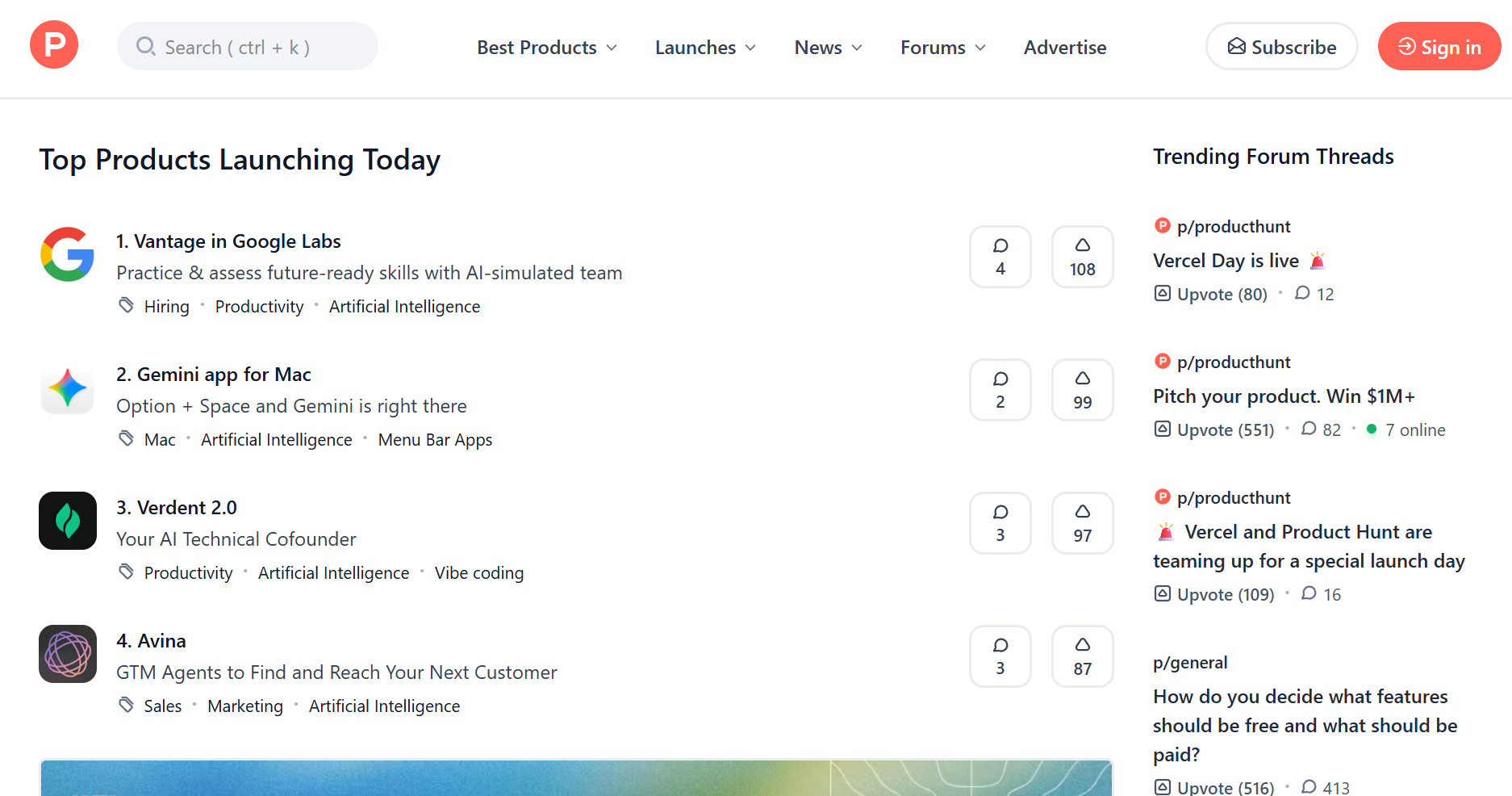
Product Hunt is the most well-known startup launch platform, where founders submit products to be upvoted by a community of early adopters, investors, and tech enthusiasts. A strong launch day — typically reaching the top 5 products of the day — can deliver thousands of website visitors, press mentions, and early customer signups.
The platform has genuine strengths: a large, engaged community, strong social proof in the form of upvotes and "Product of the Day" badges, and a feed that is watched by journalists and investors. If your target audience is tech-savvy B2B buyers or developer tool users, Product Hunt is still worth considering.
However, the model has a fundamental limitation: **visibility is almost entirely front-loaded**. Products appear on the front page for 24 hours. After that, discoverability drops sharply. There is no persistent visual presence, no gamified engagement to drive return visits, and no mechanism to keep your startup in front of new visitors weeks or months after launch. You get one window — and if the timing is wrong (wrong day of the week, competing against a bigger launch), the window closes with little to show for it.
The platform is also increasingly competitive. The number of submissions has grown significantly, making it harder for newer products without existing audiences to break through. Many founders report spending weeks building up to a Product Hunt launch only to finish outside the top 10 with minimal traffic impact.
For startups that need **lasting visibility beyond a single day**, a Product Hunt alternative is worth exploring seriously.
Pros
✓Massive community of early adopters, investors, and journalists
✓Strong social proof — "Product of the Day" badge carries real credibility
✓Good fit for B2B SaaS, developer tools, and consumer apps
✓Free to submit — no upfront cost
✓Press and investor attention on top-ranked launches
Cons
✗Front page visibility lasts only 24 hours — then traffic drops sharply
✗Highly competitive — hundreds of products launch daily
✗No persistent visual presence or profile that drives ongoing discovery
✗Community skews toward Silicon Valley tech — not representative of all markets
✗Success depends heavily on pre-launch audience mobilisation
✗No gamification or interactive engagement to bring visitors back
✗Repeat launches lose impact — you can only launch once per product
Pricing: Free to submit. Paid promotional options (Ship, Ads) available for additional visibility.
Best for: Very early-stage startups looking for their first beta testers before a public launch, as one channel among many.
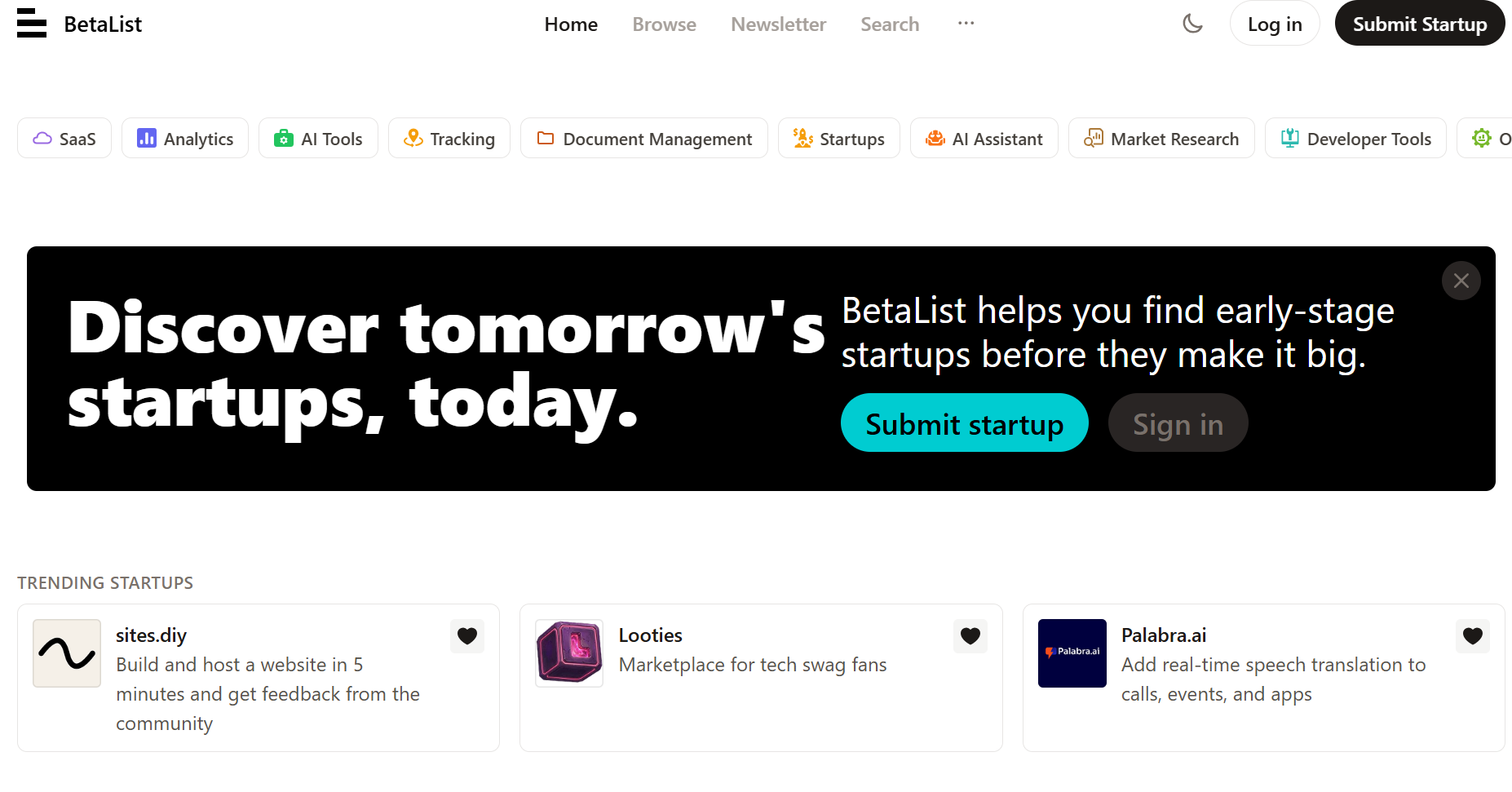
BetaList is one of the oldest startup launch platforms, specifically designed for early-stage and pre-launch products. Founders submit their product — often before it is publicly available — and BetaList's audience of early adopters signs up to try new things. The platform runs a curated email newsletter that drives traffic to newly approved listings.
The core value proposition is access to an audience that actively wants to be beta testers. If you need your first 50–200 early users to validate a product before a broader launch, BetaList can be a useful channel. The newsletter send gives a brief but targeted traffic spike.
However, BetaList has significant practical limitations. **Free submissions can take 2–4 weeks to be approved** — and sometimes longer. By the time your listing goes live, your launch window may have passed. The fast-track option ($129) accelerates this but adds cost to a platform that drives modest traffic at best. The listing format is text-heavy with no visual canvas or logo display, and there is no ongoing engagement mechanic: after the newsletter send, discoverability depends entirely on whether BetaList's pages happen to rank for your product's keywords.
For startups looking for their first beta users, BetaList is worth submitting to as one channel among many — but it should not be your primary launch strategy in 2026.
Pros
✓Specifically designed for pre-launch and beta products
✓Dedicated audience actively looking to try new products
Best for: Technical products targeting software engineers and developers, as a supplementary launch channel — not as a primary strategy.
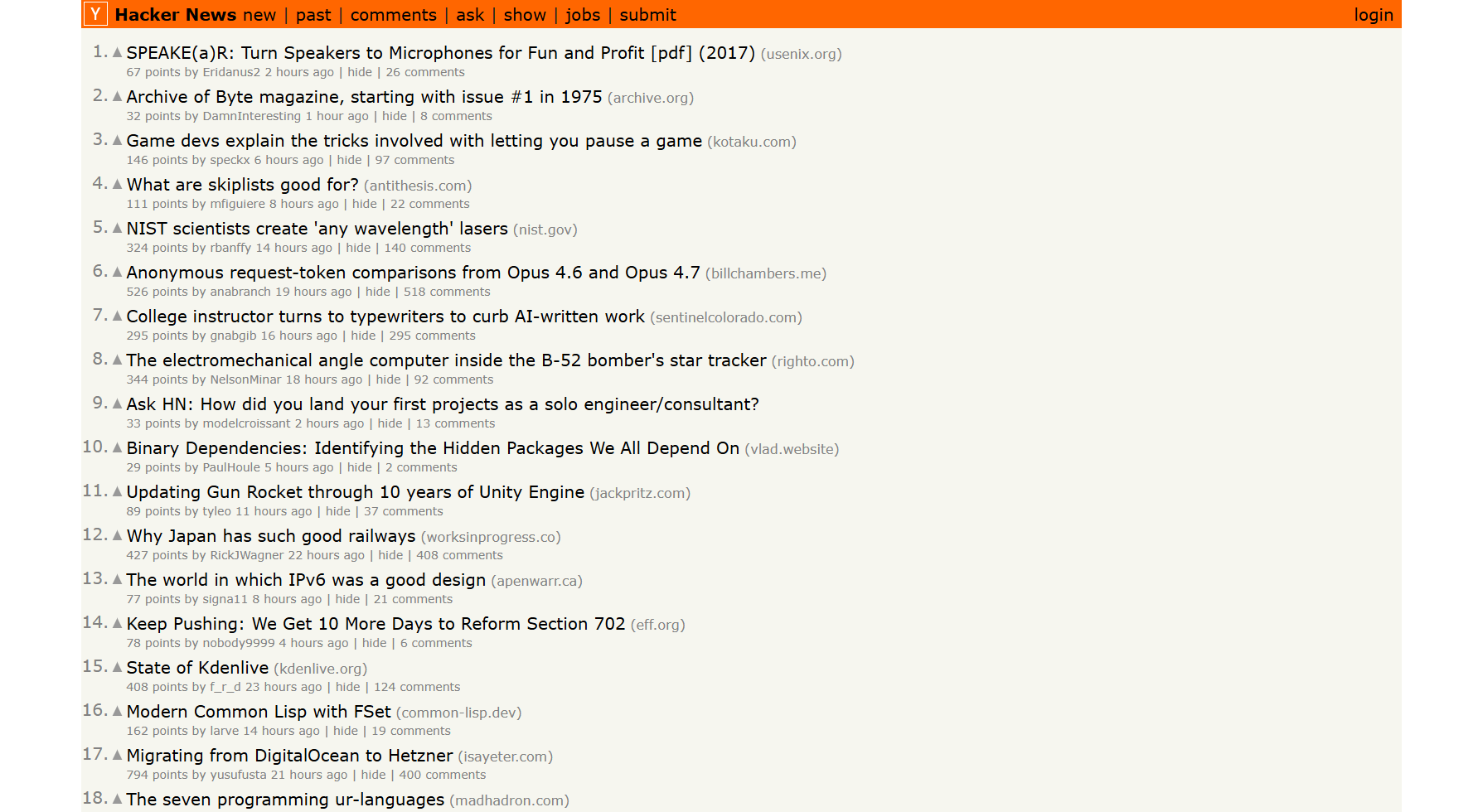
Hacker News (HN) is a social news aggregator run by Y Combinator, widely read by software engineers, technical founders, and investors in the startup ecosystem. The "Show HN" post format lets makers share what they've built directly with this audience — and a front-page Show HN can drive enormous traffic, generate hundreds of substantive comments, and occasionally lead to press coverage or investor interest.
The appeal is clear: Hacker News has one of the highest-quality technical audiences on the internet. If your product is a developer tool, a technical SaaS, or something that solves a problem engineers recognise immediately, a successful Show HN can be transformative.
But the operative word is "successful." **Most Show HN posts get fewer than 10 upvotes and never reach the front page.** The algorithm is opaque, timing matters enormously, and the community can be brutally critical of products that feel underbaked, overhyped, or commercial. There is also no structured launch mechanic — Hacker News is a news aggregator, not a startup directory. Posts that do reach the front page cycle off within hours. There are no startup profiles, no persistent listings, no visual branding, and no way to bring visitors back after the initial post.
For most startups, Hacker News is a lottery worth entering — but not a reliable launch strategy. Pair it with platforms that offer predictable, lasting visibility.
Best for: Bootstrapped founders building in public who want peer support and community feedback — as a complement to dedicated launch platforms, not a replacement.
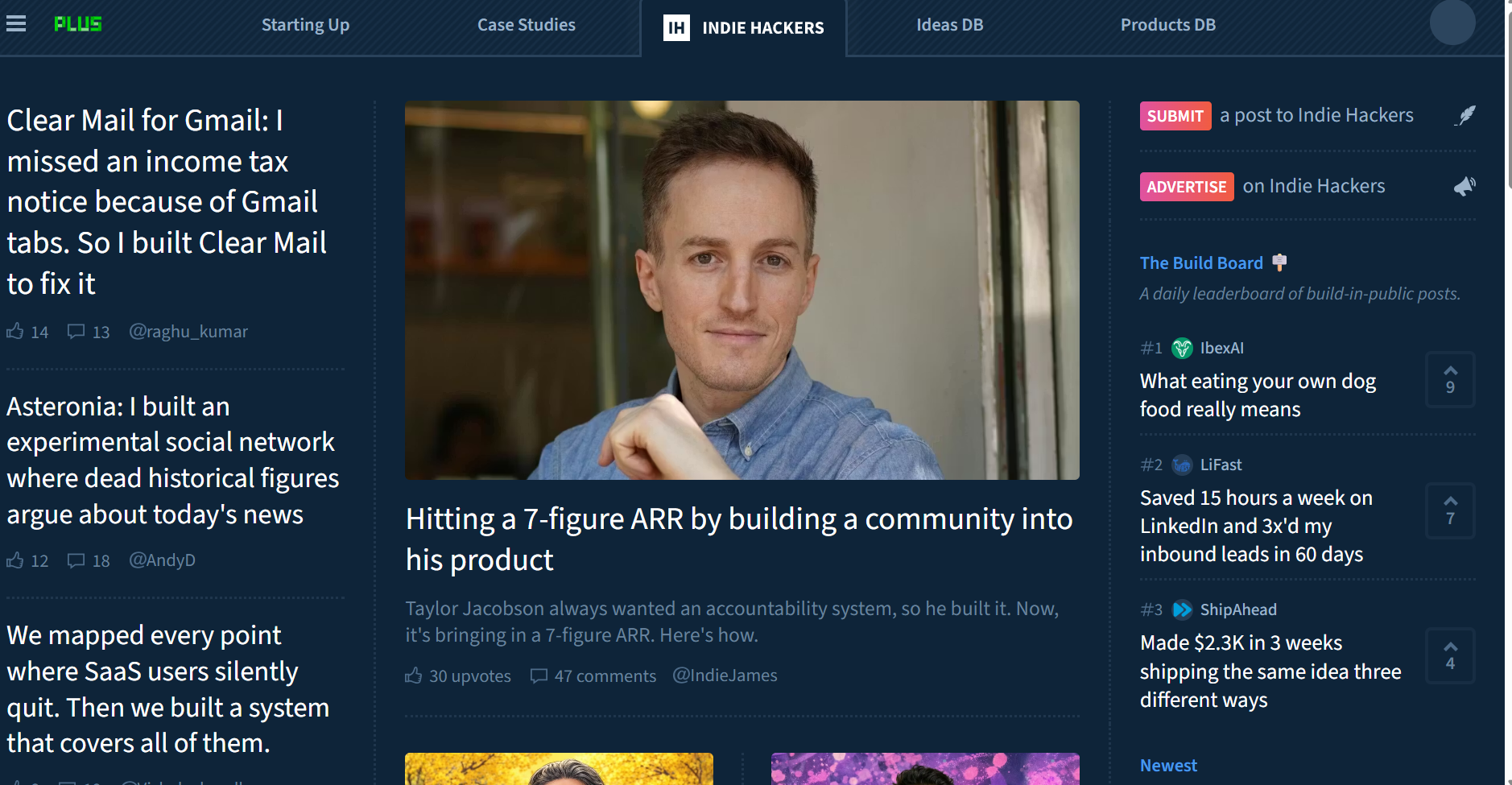
Indie Hackers is a community platform founded by Courtland Allen and acquired by Stripe in 2017. It brings together bootstrapped founders, indie makers, and solo entrepreneurs to share revenue milestones, ask for advice, and document their building journeys. At its peak, the community was one of the most active and authentic spaces for startup founders on the internet.
For networking and community support, Indie Hackers still has genuine value. The forum has threads on pricing, growth, technical decisions, and founder mental health that are difficult to find elsewhere. If you share your story — especially with real revenue numbers and honest reflections — you can attract attention from other founders, potential collaborators, and occasionally customers.
However, **Indie Hackers is not a launch platform**. There are no structured product submissions, no homepage featuring new products, no upvote mechanics, and no email newsletter that drives traffic to new listings. Visibility on Indie Hackers is entirely dependent on how engaging your posts are — a quiet launch post with no narrative hook will get little attention. The platform has also seen declining activity since the Stripe acquisition, with many power users migrating to Twitter/X and other communities.
For founders who need structured launch mechanics — a dedicated product page, persistent visibility, upvotes, click tracking, and a reason for visitors to return — Indie Hackers falls short. It is best used as a community supplement, not as a primary launch channel.
Pros
✓Supportive, authentic community of bootstrapped founders
✓Great for sharing revenue milestones and building in public
✓Real discussions on pricing, growth, and founder challenges
✓Good for finding collaborators, advisors, and peer support
✓Free to join and post with no moderation queue
Cons
✗Not a dedicated launch platform — no structured product submissions or listings
✗No homepage featuring new products or upvote mechanics
✗Visibility depends entirely on post engagement — quiet posts get ignored
✗No visual canvas, persistent logo display, or branded product profile
✗No gamification, interactive discovery, or daily return mechanic
✗Platform activity has declined since the Stripe acquisition
✗Community skews toward bootstrapped B2B SaaS — limited fit for consumer products
If you want a one-day traffic burst and your audience is tech-savvy early adopters, Product Hunt or Hacker News still deliver — but the visibility is temporary.
If you want a persistent directory listing, Uneed or BetaList are solid — though discoverability depends on their curation and search rankings.
If you want community and founder networking, Indie Hackers is the best option for connecting with bootstrapped builders.
But if you want permanent visual presence on an interactive canvas, a daily puzzle game that drives return visits, and in-game marketing inside Chess, Tetris, and Sudoku — Startup Launch Page is the most differentiated option available in 2026.
Frequently Asked Questions
What is the best free alternative to Uneed?
Hacker News (Show HN) and Indie Hackers are both free. Uneed and BetaList have free submission tiers. Startup Launch Page requires a one-time fee for a canvas box but offers permanent placement rather than a time-limited listing.
Why should I look for a Uneed alternative?
Uneed gives startups roughly 24 hours of front-page visibility. After that, discoverability drops sharply. If you want ongoing exposure — not just a launch-day spike — platforms with persistent listings, visual canvases, or regular returning visitor mechanics are better fits.
Which Uneed alternative is best for B2B SaaS?
For B2B SaaS, Uneed and BetaList have curated audiences of decision-makers and indie tool buyers. Startup Launch Page offers a visual canvas with 24/7 logo display, which works well for brand awareness among founders and early adopters who visit daily for the puzzle game.
Is Startup Launch Page a good Uneed alternative?
Yes — especially if you want lasting visibility rather than a one-day spike. Startup Launch Page offers permanent logo placement on a 1,500-box visual canvas, a daily game mechanic that drives return visitors, and in-game sponsorship slots inside Chess, Tetris, and Sudoku. The model is fundamentally different from list-based platforms.
How much does it cost to list on Uneed alternatives?
Hacker News and Indie Hackers are free. Uneed has a free tier (premium from $29). BetaList offers free submission (fast-track from $129). Startup Launch Page charges $1,500/year per canvas box for permanent placement.